
Overview
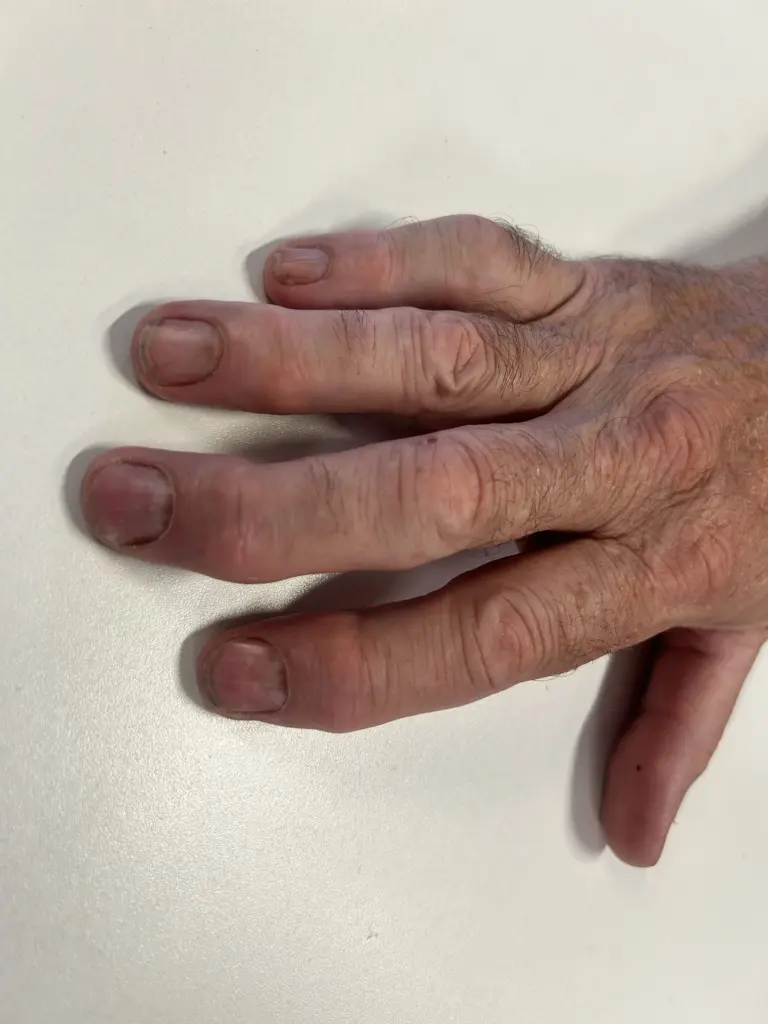
Osteoarthritis develops when the smooth, slippery articular cartilage covering the ends of the bones gradually wears thin, allowing bone surfaces to rub together. It most commonly appears from age 45 onwards and can run in families, though it can also follow a previous fracture or joint injury (post-traumatic arthritis).
While osteoarthritis can affect any joint in the upper limb, it most frequently occurs in:
- The Terminal Finger Joints (DIPJ): The joints nearest the fingertips, often causing stiffness, joint enlargement, and small bony swellings known as Heberden’s nodes.
- The Base of the Thumb (Basal Joint): The universal joint between the metacarpal and trapezium bones, causing pain during pinching or twisting tasks such as turning keys or opening jars.
- The Wrist Joint: The complex articulation connecting the forearm (radius and ulna) with the carpal bones, causing deep aching during lifting or weight-bearing.
What is the Treatments
- Activity Adjustment: Modifying daily tasks to reduce strain on painful joints.
- Medications & Gels: Simple painkillers, oral anti-inflammatories, or topical gels.
- Splinting & Support: Using rigid splints during acute flare-ups or flexible neoprene supports for daily functional stability.
- Targeted Steroid Injections: Cortisone injections into affected joints to reduce localized inflammation and relieve pain.
- Surgical Treatment: Joint fusion, bone removal (trapeziectomy), osteotomy, or joint replacement for persistent, severe symptoms.
The Procedure
Many episodes of hand, finger, thumb, and wrist pain settle over weeks or months with rest, splinting, anti-inflammatory measures, or steroid injections. Where a joint remains persistently painful despite non-surgical treatments and affects your quality of life, surgical options may be considered.
Depending on the specific joint affected, surgical techniques include:
- Terminal Finger Joint (DIPJ) Fusion: Permanently stiffening a persistently painful finger joint in a comfortable, straight, or slightly bent position to eliminate bone-on-bone pain.
- Trapeziectomy (Thumb Base Surgery): Removing the arthritic trapezium bone at the base of the thumb, often combined with ligament reconstruction, to restore painless thumb movement.
- Wrist Fusion or Carpectomy: Fusing damaged carpal bones or removing worn wrist bones (proximal row carpectomy) to relieve severe wrist arthritis.
- Joint Replacement (Arthroplasty): Replacing damaged joint surfaces with specialized implants to preserve motion where appropriate.
Ms Anna Moon thoroughly evaluates your clinical history and diagnostic imaging, discussing the precise balance between pain relief and functional movement to recommend the optimal treatment pathway.
Recovery & Aftercare
Frequently Asked Questions
What causes osteoarthritis in the hands, fingers, and thumbs?
Are the bony bumps on my fingers (Heberden’s nodes) dangerous?
No. These nodes are common bony swellings associated with osteoarthritis in the terminal finger joints. While they may cause temporary tenderness or joint stiffness, they are not harmful.
Why does arthritis at the base of the thumb make daily tasks difficult?
The thumb base joint provides essential stability for pinching and grasping. Arthritis in this joint causes sharp or aching pain during twisting motions, such as opening jars, turning door handles, or turning keys.
Can hand, thumb, and wrist osteoarthritis be managed without surgery?
Yes. The majority of patients manage their symptoms effectively using activity modification, supportive splinting, anti-inflammatory gels, and occasional steroid injections. Surgery is generally considered a last resort when non-surgical measures no longer provide relief.
Does hand osteoarthritis get worse over time?
While cartilage wear is gradual, symptoms often stabilize for long periods. Ms Anna Moon can advise on the expected progression based on your individual assessment and imaging.