
Treatments

Lacertus Syndrome

Ms Anna Moon treats Lacertus syndrome in Worcester and Solihull, addressing proximal median nerve compression often mistaken for carpal tunnel syndrome.

Overview

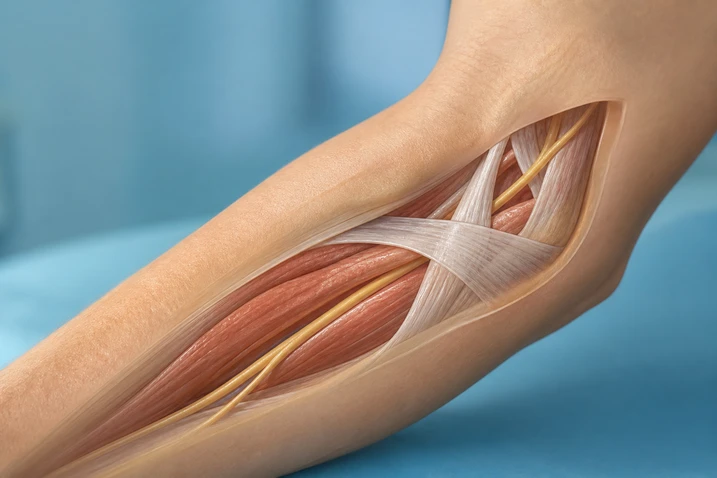
Lacertus syndrome occurs when the median nerve becomes compressed near the elbow, beneath a band of tissue called the lacertus fibrosus. It’s an under-recognised condition that shares some features with carpal tunnel syndrome, particularly weakness in the hand, but tends to cause more forearm pain, fatigue and a sense of clumsiness rather than the classic nighttime tingling seen in carpal tunnel syndrome. It’s sometimes identified in patients who have had carpal tunnel treatment without full relief of their symptoms. Ms Anna Moon has a particular interest in identifying and treating this less commonly diagnosed nerve compression.

What is the Treatments

The Procedure

Lacertus syndrome can be difficult to diagnose, as standard nerve conduction studies don’t always detect it reliably, so diagnosis relies heavily on clinical examination and specific tests for tenderness and weakness along the nerve’s path. Initial treatment often includes activity changes, nerve gliding exercises, or a corticosteroid injection. Where symptoms persist, a minimally invasive procedure to release the lacertus fibrosus and relieve pressure on the nerve may be recommended, often performed as a day case under local anaesthetic.

Recovery & Aftercare

Many patients notice improvement in strength and reduced pain following surgical release, sometimes fairly soon after the procedure, though full recovery of hand endurance can take longer. Ms Anna Moon provides guidance on gradual return to activity and arranges follow-up review to monitor progress.

Frequently Asked Questions

What is Lacertus syndrome?

Lacertus syndrome is compression of the median nerve near the elbow, beneath a band of tissue called the lacertus fibrosus, causing hand weakness, fatigue and forearm pain.

Lacertus syndrome tends to cause more hand weakness, fatigue and forearm pain, with less of the classic nighttime tingling associated with carpal tunnel syndrome, and the compression occurs higher up, near the elbow.

Standard nerve conduction studies don’t always detect this type of compression reliably, so it can be overlooked or mistaken for other conditions such as carpal tunnel syndrome or tennis elbow.

Milder cases may improve with activity changes, nerve gliding exercises or an injection. Surgery is generally considered when symptoms are more persistent or significantly affect hand function.


Book your appointment.

We understand that each person’s journey is unique, and so is the care they need.

Anna Moon

Consultant Orthopaedic Hand Surgeon

Anna’s practice is grounded in a simple belief: every patient deserves a partner in their long-term health, not just a clinician for moments of crisis. Her work centres on prevention, on listening, and on empowering people to age with confidence and strength.

Key Benefits

Image gallery marquee
Next step

Ready to take the next step?

If hand or wrist symptoms are affecting your comfort, confidence, work, sleep or everyday activities, specialist assessment can help you understand what is happening and what can be done.