
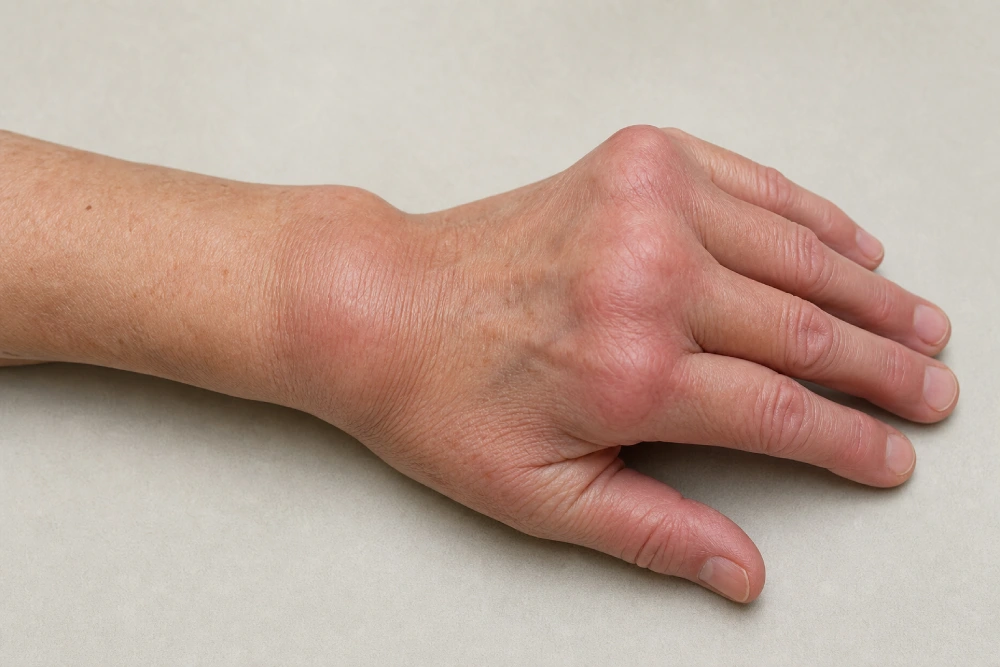
Overview
Rheumatoid arthritis is a chronic autoimmune condition in which the immune system attacks the body’s own joint tissue, often starting in smaller joints such as those in the hands and wrists. It typically affects matching joints on both sides of the body and can, over time, lead to swelling, deformity, and in some cases tendon damage. Ms Anna Moon works alongside rheumatology teams to manage the hand-related effects of the condition.
What is the Treatments
- Coordination with a rheumatologist for disease-modifying medication
- Steroid injections for symptom flare-ups
- Splinting to support affected joints
- Contrast soaks and other supportive therapies
- Surgery for tendon damage or advanced joint involvement
The Procedure
Medical management, usually directed by a rheumatologist, forms the foundation of care, using disease-modifying medication to reduce immune activity in the joints. Alongside this, Ms Anna Moon can address hand-specific complications, such as tendon rupture or joint deformity, through splinting, injections, or surgery where appropriate, aiming to relieve pain while preserving hand function.
Recovery & Aftercare
Ongoing rheumatological care alongside hand-specific treatment helps manage the condition over the long term. Following any surgical intervention, recovery typically involves splinting and structured hand therapy to support healing and function.
Frequently Asked Questions
What is the difference between rheumatoid and osteoarthritis?
Rheumatoid arthritis is an autoimmune condition that can affect multiple joints symmetrically, while osteoarthritis is caused by mechanical wear of the cartilage, usually in specific joints.
Can rheumatoid arthritis damage tendons in the hand?
Yes, in some cases inflammation associated with rheumatoid arthritis can weaken tendons, occasionally leading to rupture, which may require surgical repair.
Who manages rheumatoid arthritis treatment?
Medication is generally directed by a rheumatologist, while Ms Anna Moon focuses on hand-specific complications such as joint damage or tendon involvement.
Is surgery needed for rheumatoid hand problems?
Not always. Surgery is generally considered when medication and supportive therapies don’t adequately control symptoms, or when structural damage affects hand function.