Overview
What is Involved
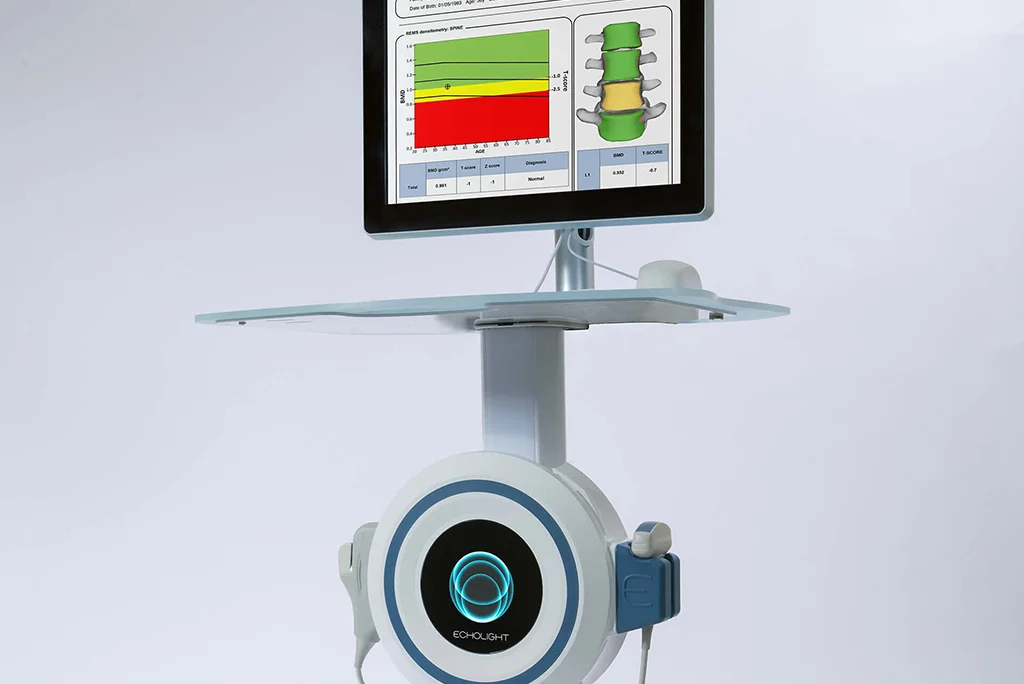
- Ultrasound Assessment: A short, non-invasive scan of the lower back (lumbar spine) and hip.
- Zero Radiation: Uses sound waves rather than X-rays—no injections, contrast dye, or ionising radiation.
- Dual Evaluation: Measures both bone mineral density (BMD) and structural bone quality (Fragility Score).
- T-Score Classification: Generates a T-score comparing your bone density to a healthy young adult reference standard.
- Personalised Care Plan: Detailed discussion of results and bone health guidance with Ms Anna Moon.
The Procedure
After Your Scan
Results are available shortly after the scan is complete. Ms Anna Moon will review your findings with you, explaining what your T-score and fragility score mean for your overall bone health:
- Normal Bone Density: Reassurance and general lifestyle advice to maintain bone strength.
- Osteopenia (Low Bone Mass): Guidance on targeted exercise, nutrition (calcium and Vitamin D), and routine monitoring to prevent further bone loss.
- Osteoporosis: Clear recommendations regarding lifestyle modifications, risk reduction, and medical management options in coordination with bone health specialists where appropriate.
Frequently Asked Questions
What is a REMS bone scan used for?
A REMS scan measures bone mineral density and evaluates bone quality at the spine and hip. It is primarily used to screen for osteopenia and osteoporosis, assess fracture risk, and monitor bone health over time.
Is a REMS scan safe?
Yes. REMS uses ultrasound (sound waves) rather than X-rays. Because there is no exposure to ionising radiation, it is completely safe and suitable for regular, repeated monitoring when clinically indicated.
How does REMS compare to a traditional DEXA scan?
Clinical studies show a high correlation between REMS and DEXA results for measuring bone mineral density. REMS offers the added benefits of being 100% radiation-free and providing an assessment of structural bone quality alongside density.
What is a T-score?
A T-score is a standardised metric that compares your bone mineral density to that of a healthy 30-year-old adult. It classifies your bone density as normal, low bone mass (osteopenia), or osteoporosis.
Who might benefit from a REMS bone density scan?
REMS scanning is ideal for anyone seeking an accurate, radiation-free evaluation of their bone health—including individuals with a family history of osteoporosis, post-menopausal women, patients taking medications that affect bone density, or those wanting to monitor their bone strength over time.