
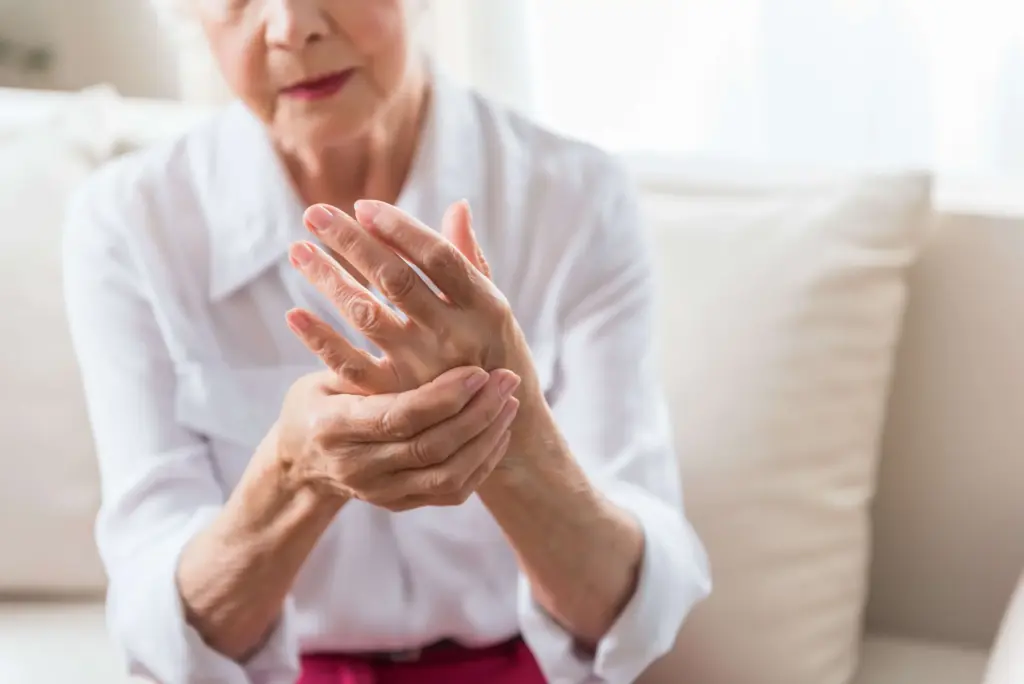
Dupuytren’s contracture often comes on slowly and quietly. You might notice a bit of tightness in your hand or a small lump in your palm.
Over time, though, the tissue just under the skin, the fascia, starts to thicken and shrink, gradually pulling one or more fingers into a bent position that you can’t fully straighten.
At The Hand Clinic, we see a lot of people with this condition which can interfere with daily life. Simple things like putting your hand flat on a table, shaking hands, or putting on gloves can become awkward or even impossible. The good news? There are ways to manage it, and the earlier we take a look, the more options you’ll have.
Understanding the Condition
We don’t know the exact cause of Dupuytren’s contracture, but we do know it’s more common in people with Northern European ancestry and that it often runs in families. So if one of your parents or grandparents had it, you might be more likely to develop it too.
Other factors that can increase your risk include:
- Diabetes
- Smoking
- Drinking a lot of alcohol
That said, many people with the condition have none of these risk factors. It doesn’t seem to be linked to manual work or using your hands a lot. In some cases, in genetically predisposed patients, it could appear after a hand injury or surgery.
Common Symptoms
The condition usually starts with a small, firm lump (a nodule) in the palm. This often sits right beneath the ring or little finger. Over time, the nodule may grow into a cord that pulls the finger into a bent position.
You might also notice:
- Dents or pits in the skin over the bump
- Thick bands in the palm
- A tight feeling in the web between your fingers
- Nodules on the knuckles or even the soles of the feet (in some cases)
Early on, these nodules might feel tender if you press on them, but the discomfort usually fades. The condition progresses slowly, over months or years.
When Should You Get Help?
If your hand still lies flat and the lump isn’t getting in the way, you might not need any treatment right away. But if you find that you’re unable to put your hand flat on a table, or you’re struggling with everyday tasks like putting on gloves, typing, or holding tools, it’s a good time to speak to a specialist. At The Hand Clinic, we can assess the stage of the condition and talk through the best options for you.
Your Treatment Options
There isn’t a cure for Dupuytren’s contracture, but there are treatments that can help restore movement and reduce the impact on your daily life. These options range from leaving it alone if appropriate, simple procedures done in the clinic to more involved surgery, depending on how severe the contracture is.
Common treatments include
Fasciotomy
A fasciotomy is one of the less invasive procedures. Rather than removing any tissue, it simply involves cutting the tight, thickened cord that’s pulling the finger down. This release helps the finger to straighten again. It’s often done using a needle (called a needle fasciotomy or percutaneous needle fasciotomy), usually under local anaesthetic. It’s quick and has a short recovery time, but because the diseased tissue is left in place, there’s a higher chance the contracture will return in the future.
Segmental Fasciectomy
This procedure involves removing small sections of the affected cord through several small incisions. It helps reduce the contracture while preserving as much of the healthy surrounding tissue as possible. Segmental fasciectomy is less extensive than full surgery, so recovery tends to be faster and the risk of complications is lower.
Regional Fasciectomy
This is the most common surgical treatment for more established cases. The entire length of the diseased cord is removed through a longer incision, usually made in the palm. By removing all the affected tissue, this procedure gives the best chance of improving finger movement and lowering the risk of the contracture coming back compared to less invasive methods.
Dermofasciectomy
In more severe or recurring cases, a dermofasciectomy may be recommended. This involves removing not only the thickened fascia but also the overlying skin if it’s been affected. The area is then covered with a skin graft, usually taken from the upper arm. This is a more involved procedure, but it offers the lowest chance of the contracture returning, especially when previous treatments haven’t worked or the skin is significantly involved.
Most of the procedures are done under a peripheral nerve block when a Consultant Anaesthetist blocks your arm to numb it and gives you sedation to relax you.
You recover much quicker after a peripheral nerve block and avoid the risks and common side effects of a general anaesthetic such as sickness, tiredness and the risk of DVT.
The block also provides good pain relief following surgery, and on the whole patients tend to prefer this option with sedation to a general anaesthetic.
What Is Recovery Like?
After surgery, your hand will be wrapped in a soft bandage. We will advise you to keep your hand elevated and keep moving your fingers within the bandage. You can use the fingers which were not operated on for your daily activities within reason but you would need to keep your bandages dry and clean to minimize the risk of infection.
We will see you in clinic a week after surgery to check on the wound and to change and reduce the dressing to allow you to mobilise further. You will also see a hand therapist at that point to advise you on gentle exercises, scar management and if necessary provide you with a custom-made splint to wear at night.
Depending on the extent of surgery you may start driving 1-2 weeks post surgery.
There is no need for removal of sutures as we use dissolvable sutures. You can start getting your hand wet 12-14 days post surgery and the sutures will start dissolving and fall off.
Recovery times vary. Some people bounce back within 2-3 weeks, while others may need longer. It all depends on how advanced the condition was and which procedure was done. The condition can come back, either in the same finger or in a different part of the hand, but many people only ever need one surgery in their lifetime.
It all depends on your risk factors and at what age you develop the condition. If you first develop Dupuytren’s contracture after the age of 50, it tends to be less aggressive.
You’re in Good Hands
At The Hand Clinic, we combine expert surgical care with thoughtful rehabilitation. Consultant Hand Surgeon Ms Anna Moon has decades of experience in treating complex hand conditions and is known for her patient-focused, personalised care. Whether you’re just starting to notice a change or need help after years of living with contracture, we’ll guide you through your options and support your recovery every step of the way.
If you’re unsure about that lump in your palm or struggling with a finger that just won’t straighten, don’t wait. Book an appointment or get in touch with our team. We’re here to help.